

The Online Video Revolution Strategy, Advertising, and Viewer Behavior
The Online Video Revolution section explains how online video changed business websites, advertising, publishing, and digital marketing. These resources cover viewer behavior, pre-roll advertising, completion rates, mobile video, original video content, YouTube/Vimeo limitations, video testing, and online conversions.
Online video became important because it helps businesses explain, persuade, advertise, and measure engagement in one format. Instead of relying only on text or static images, companies can use video to show products, introduce services, educate customers, and guide users toward action.
This section includes resources on:
- Pre-roll video advertising
- Viewer attention and abandonment
- Video completion rates
- Mobile video strategy
- Original pre-roll content
- Video play controls
- Smaller-screen viewing behavior
- Video testing for better conversions
- YouTube and Vimeo limitations
- Online video conversions
- Publisher revenue opportunities
- Interactive formats like overlays and custom skins
Viewer Behavior and Attention
A strong video strategy starts with understanding how people watch. Viewers decide quickly whether a video is worth their time, so length, placement, controls, and opening message all matter.
This section covers:
- Why viewers abandon videos
- How completion rates show performance
- Why the first few seconds matter
- How play controls affect engagement
- Why mobile viewers need shorter, clearer experiences
- How testing helps improve conversions
Pre-Roll, Ads, and Publisher Revenue
Video advertising became powerful because it captures attention before, during, or around content. Pre-roll, overlays, custom skins, and interactive formats can help publishers and businesses turn video into revenue.
Key topics include:
- Pre-roll advertising strategy
- Original pre-roll video content
- TrueView-style ad trends
- Publisher revenue opportunities
- Overlay and custom skin formats
- Video ads designed for awareness, engagement, or conversion
Video Strategy and Early Decisions
Successful video programs require planning before production begins. Businesses need to know what the video is supposed to do and where it will live.
Important decisions include:
- Website page placement
- Target audience
- Video length and format
- Call-to-action
- Player type
- Measurement goals
- Awareness, education, conversion, or monetization purpose
YouTube, Vimeo, and Owned-Site Video
Public platforms can help with reach, but they are not always the best choice for business video on owned websites. Companies often need more control over branding, analytics, calls-to-action, and the viewer experience.
Oculu helps businesses keep more control through:
- Branded video players
- First-party website embeds
- Custom calls-to-action
- Viewer analytics
- Publisher ad formats
- Interactive overlays
- Owned-site video delivery
The Modern Online Video Shift
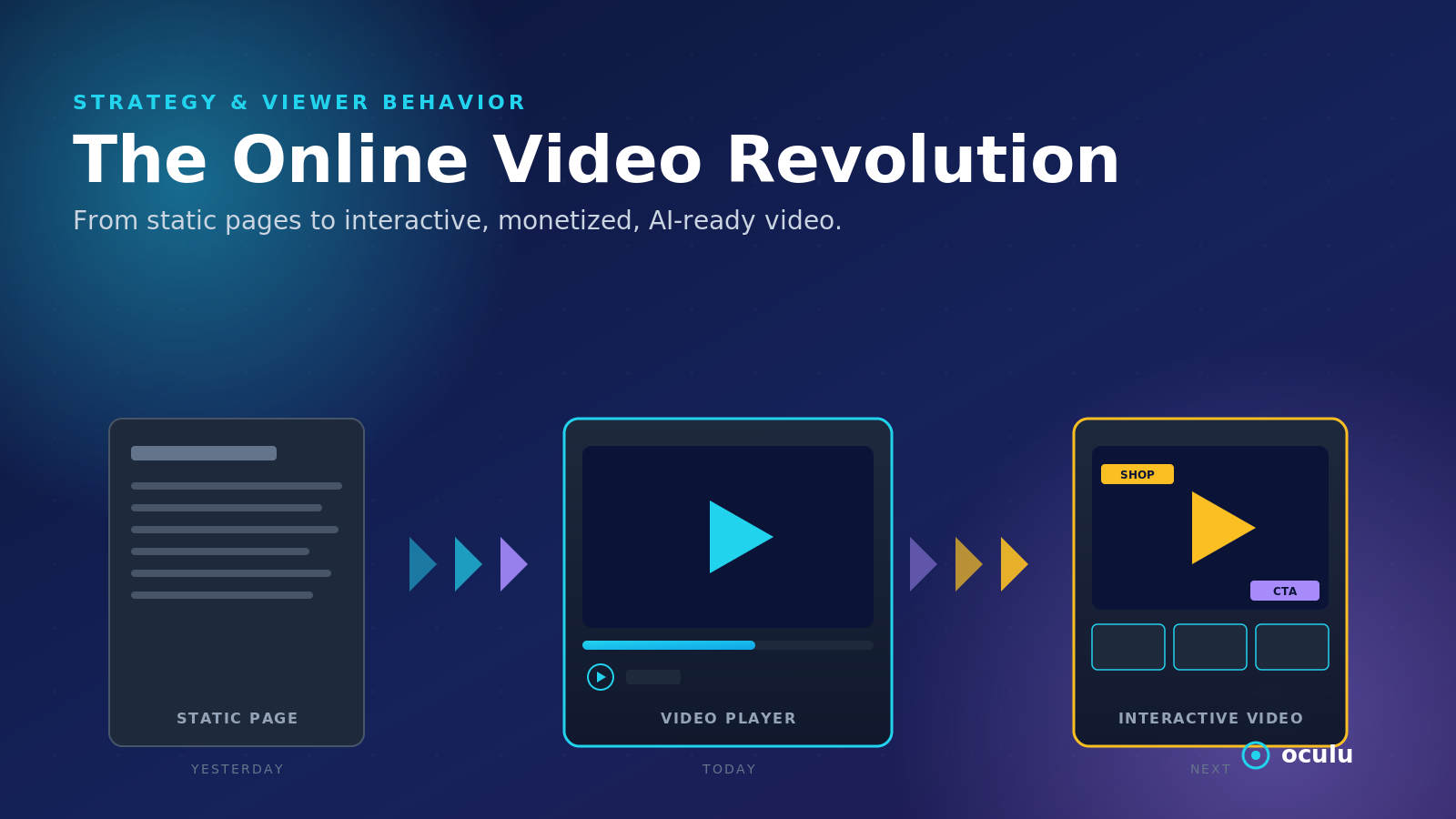
Today, online video includes more than traditional web video. Businesses are using AI-generated content, personalized video, interactive overlays, shoppable video, video SEO, and AI-search optimization.
This shift matters because:
- Video helps explain ideas faster
- Interactive formats can improve engagement
- AI makes video easier to scale
- Hosted players keep traffic on owned websites
- Analytics show what viewers actually do
- Better video structure supports search and AI discovery
Frequently Asked Questions
The online video revolution is the shift from static web content toward video-driven communication, advertising, marketing, education, and monetization across websites and digital platforms.
Businesses need a video strategy so each video has a clear purpose, placement, audience, call-to-action, and measurement plan.
Completion rates show how many viewers finish a video. They help businesses understand whether the message, length, format, and placement are working.
They can be useful for reach, but businesses often need more control over branding, analytics, ads, player formats, and on-site conversion than public platforms provide.