

Increase Conversions: Add Video to Your Website
Quick Answer
Video can increase website conversions when it answers the visitor’s question, reduces uncertainty, builds trust, and guides the viewer toward a clear next step. The highest-performing website videos are short, specific, well-placed, professionally hosted, mobile-friendly, and connected to a measurable conversion goal.
Why Video Helps People Take Action
People convert when they understand value and feel confident enough to act. Video helps because it can show the product, explain the service, introduce the team, demonstrate proof, and make the offer easier to understand.
A visitor who might skim a paragraph may watch a 45-second video that explains the same idea more clearly. That does not mean video replaces copy. The best conversion pages use video and copy together: the video builds clarity and trust, while the page copy supports details, proof, and action.
The Right Video for the Right Conversion Goal
Not every conversion video should look the same. A homepage video should explain the brand quickly. A product video should show the product in action. A landing-page video should reinforce the offer. A testimonial video should reduce risk. A support video should remove confusion.
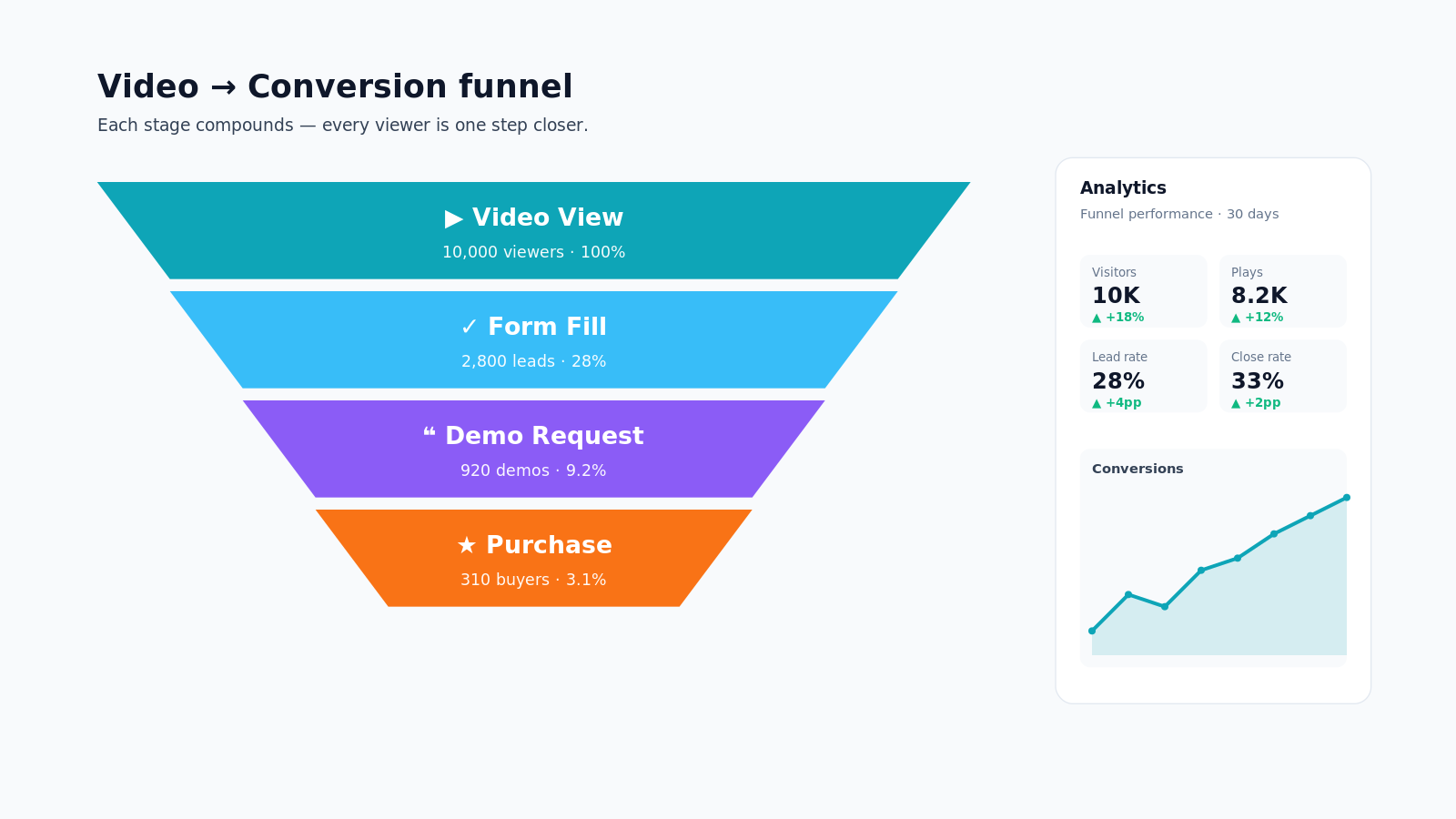
The message should match the action. If the goal is a demo request, the video should explain why the demo is worth booking. If the goal is a purchase, the video should show the product’s value and remove common objections.
Conversion-Focused Video Rules
A conversion video should be built around clarity, not entertainment for its own sake. Strong conversion videos usually follow these rules:
- Get to the point quickly
- Explain the viewer’s problem
- Show the product or solution
- Make the value obvious
- Avoid unnecessary company history
- Use captions for silent viewing
- Include a clear next step
- Place the video near the CTA
- Measure performance and test variations
Why Placement Matters
A video hidden at the bottom of a page will not do much. Video should appear where the visitor is making a decision. This could be above a lead form, next to a pricing section, inside a product page, or near a consultation CTA.
Placement also affects intent. A video near the top of a page should orient the visitor. A video near the bottom should remove final objections. A video inside a form area should explain why completing the form is worth it.
User Control vs. Autoplay
Autoplay can work in some formats, but it should be used carefully. Visitors should not feel attacked by sound, motion, or a player they cannot control. In most website contexts, user-initiated video is safer and more respectful.
That said, silent autoplay, hover-based video, overlay formats, and short looping previews can be effective when designed properly. The key is testing. Businesses should measure whether the format improves engagement or causes abandonment.
AI Video and Conversion Personalization
AI-generated video makes it possible to create more targeted conversion content. A company can create different versions for industries, locations, customer types, product lines, or campaign audiences.
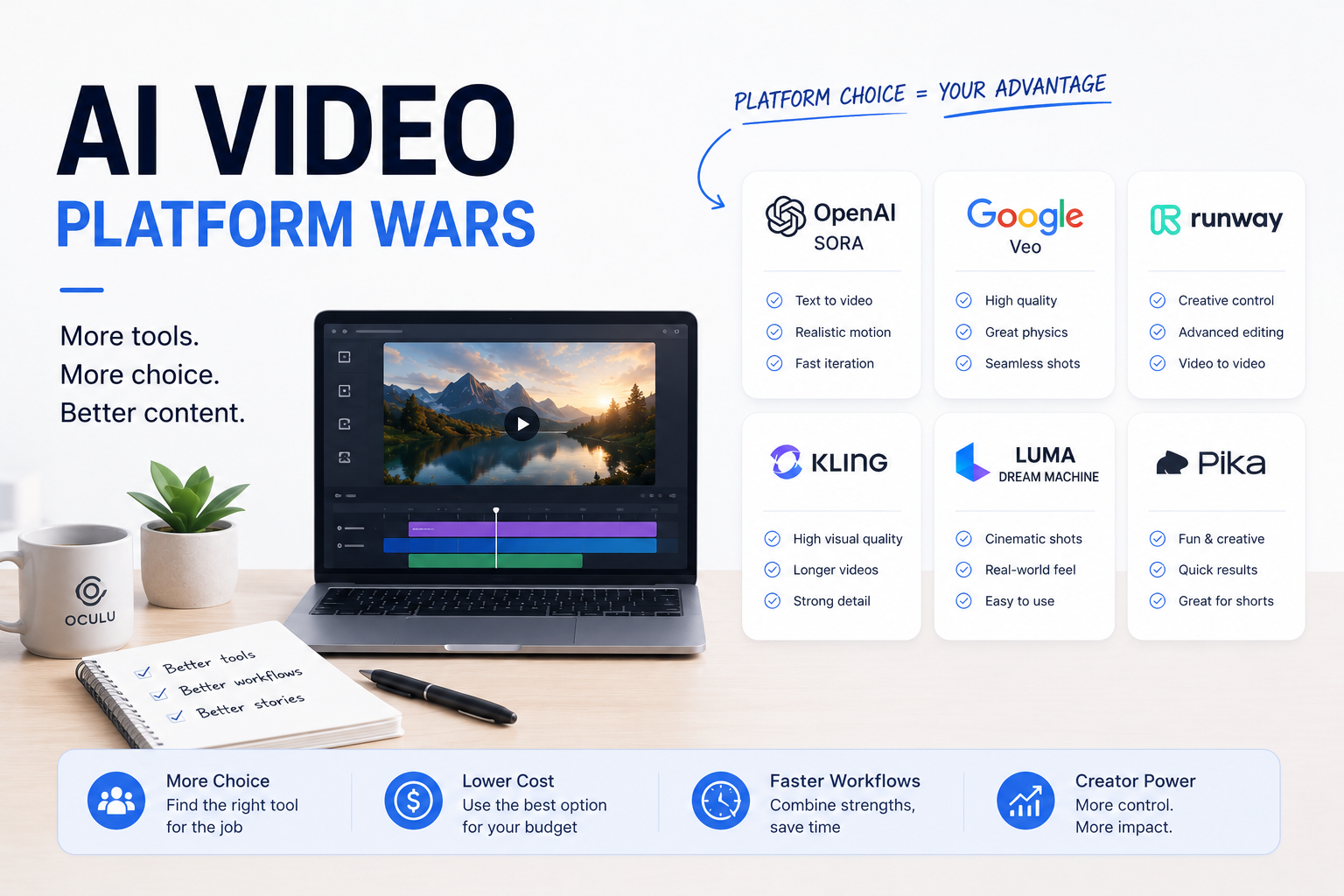
This is where hosting and management matter. If a business creates many AI video variations, it needs a platform that can organize, embed, measure, and update those videos without slowing the website or confusing the marketing team.
How Oculu Helps Increase Conversions
Oculu supports business video experiences that are built for websites, not just video libraries. The platform can help businesses host videos, embed them on conversion pages, use branded players, add overlays or calls-to-action, and track engagement.
For businesses trying to turn video into leads, sales, or pipeline, Oculu helps connect the video experience to the business outcome.
Key Takeaway
Video increases conversions when it is used with purpose. The strongest results come from matching the video to the visitor’s decision, placing it near the action, making it easy to watch, and using analytics to improve performance over time.
Frequently Asked Questions
Video increases conversions by explaining value faster, building trust, reducing uncertainty, and guiding visitors toward a clear action.
Place it near important decision points such as product sections, pricing areas, lead forms, demo CTAs, or checkout pages.
Autoplay can work in some cases, especially silent preview formats, but businesses should test it carefully and always protect the user experience.