

An ultimate guide to video monetization
Video monetization is the process of generating revenue from online video content — through advertising, subscriptions, transactional sales, sponsorships, or lead capture, depending on who the audience is and what role video plays in the business.
For publishers, monetization usually means video ads. For businesses, it means using video to drive conversions, qualified leads, and customer revenue. The right model depends on which one describes you.
The 5 Main Video Monetization Models
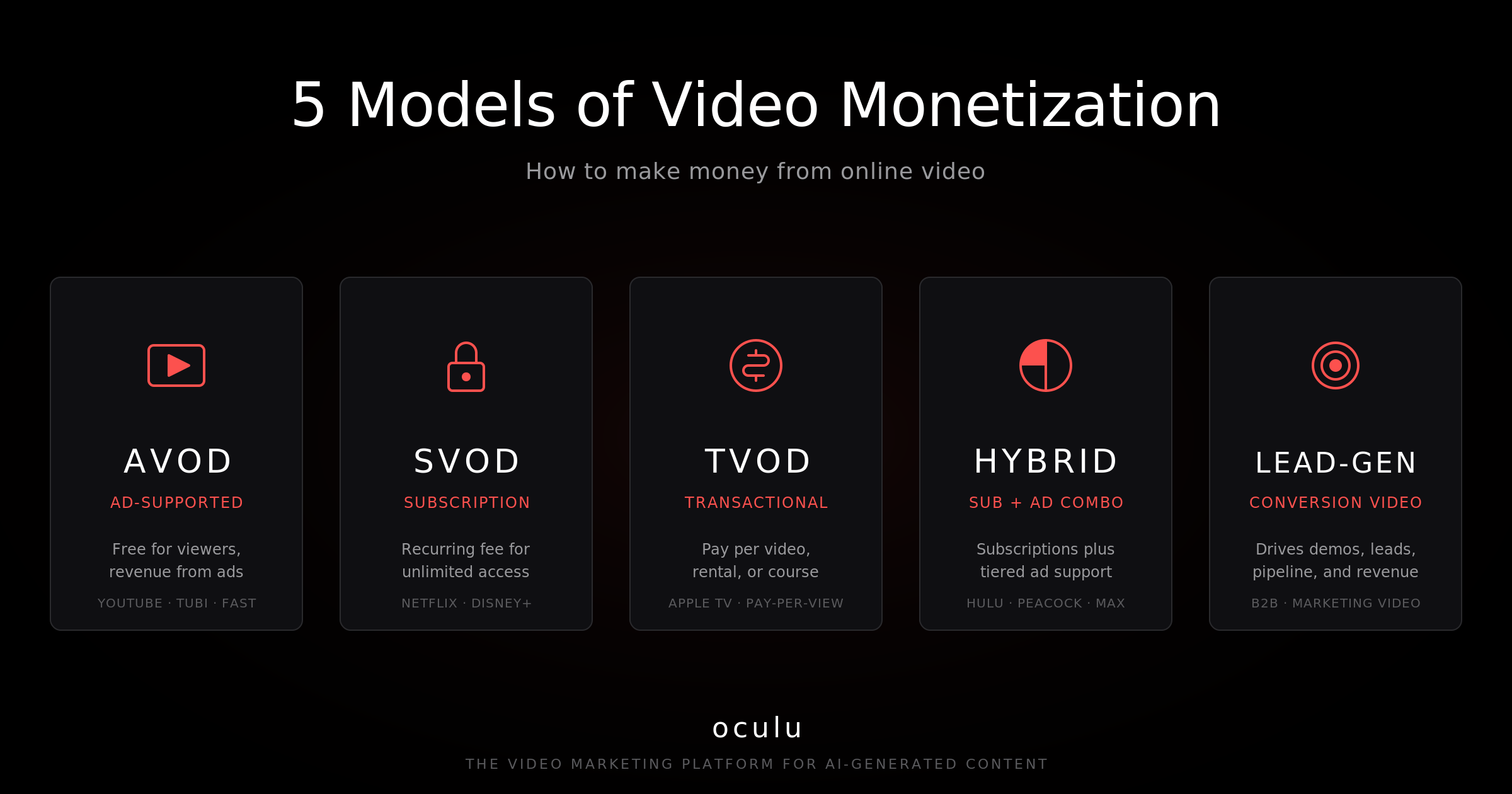
- AVOD (Ad-Supported Video on Demand) — viewers watch free; revenue comes from ads inserted before, during, or alongside the content (YouTube, Tubi, FAST channels)
- SVOD (Subscription Video on Demand) — viewers pay a recurring fee for unlimited access (Netflix, Disney+, niche creator memberships)
- TVOD (Transactional Video on Demand) — viewers pay per video, rental, or download (Apple TV, training course unlocks, pay-per-view events)
- Hybrid models — combine subscriptions with ads or transactional purchases (Hulu, Peacock, Max)
- Lead-gen and conversion video — the video itself isn’t monetized directly; it drives sales, demos, or pipeline for a business (the dominant model for B2B marketing video)
Video Ad Format Types
When monetization runs through advertising, the ads can be placed in several positions relative to the video content:
- Pre-roll ads — play at the beginning of the video, before the main content. The most common and most monetized format because viewer attention is highest at the start.
- Mid-roll ads — play in the middle of longer-form content. Common on long videos and connected-TV (CTV) platforms; less common on short web video because they interrupt completion.
- Post-roll ads — play at the end of the video. Lower-paying because many viewers leave before they run, but useful for retargeting and call-to-action.
- Overlay ads — appear on top of the video as banners or interactive elements without interrupting playback. Pair well with shoppable and direct-response campaigns.
- Display ads — sit alongside the player on the page. Common on YouTube and large publisher sites.
- Branded content and sponsorships — paid integration into the video itself, increasingly used in influencer and creator monetization.
How to Choose a Monetization Model
Work backward from the audience and the business:
- Large public audience, lots of inventory? AVOD with pre-roll is the highest-volume play
- Premium content people will pay for? SVOD or hybrid
- Niche, high-value training, courses, or events? TVOD
- B2B or business marketing? Lead-gen and conversion video — measure pipeline, not ad revenue
- AI-generated content at scale? Pair with overlay or pre-roll ads, since production cost is near-zero
Most modern video programs use a hybrid: a few cornerstone videos drive conversions, while supporting content carries pre-roll inventory for incremental revenue.
How to Sell the Ads You Run
Two paths once you’ve picked an ad-supported model:
- Sell direct — work directly with advertisers. Higher revenue per impression, but heavier sales effort.
- Use an ad network — let a network (Google Ad Manager, programmatic SSPs) fill inventory. Easier to implement, faster to monetize, but you share revenue with the network.
Most publishers run both — direct deals on premium placements, programmatic on the long tail.
Where Oculu Fits
Oculu provides the hosting and player infrastructure that makes video monetization actually work on your own site, instead of sending viewers to YouTube and watching the revenue go elsewhere.
For publishers, Oculu offers:
- pre-roll integration in three player formats (click-to-play, lightbox, autoplay)
- support for Google DFP / Ad Manager linear ad units
- overlay ad formats and end cards for direct-response campaigns
- shoppable video formats for ecommerce
- video syndication to extend reach across partner sites
For businesses, Oculu serves the lead-gen and conversion side of monetization — branded player, first-party analytics, and AI-generated video support — so video drives pipeline rather than ad pennies.
Key Takeaway
Video monetization isn’t one strategy — it’s five models (AVOD, SVOD, TVOD, hybrid, conversion video) with different ad formats layered on top. Pick the model that matches your audience and business, then choose the ad placements and sales path that fit it. Hosting on a platform built for monetization is what makes the math work.
Frequently Asked Questions
Pre-roll ads — the ones that play before the main video — are the most widely used format on web and connected-TV platforms. They get the highest attention because viewer focus is strongest at the start of playback, which is also why they typically command the highest ad rates.
AVOD is ad-supported, free for viewers, revenue comes from ads. SVOD is subscription-based, viewers pay a recurring fee (Netflix model). TVOD is transactional, viewers pay per item (rental, course unlock, pay-per-view). Many modern platforms combine them into hybrid models like Hulu or Peacock.
Yes. For most B2B and direct-to-consumer businesses, the goal isn’t ad revenue — it’s using video to drive product demos, lead capture, sales conversions, or customer retention. The “monetization” comes from the pipeline and revenue the video generates, not from ad impressions. Hosting on a business video platform like Oculu gives you the analytics and CRM hand-off needed to measure that revenue.